When compliance comes before connection, we miss the mark on behaviour change.
The definition of ‘compliance’ is the act of obeying a law or rule, especially one that controls a particular industry or type of work (Cambridge Dictionary). Note the word control! Now, don’t get me wrong, every classroom and home needs a sense of control - boundaries and clear expectations help support children to feel safe. This safety lays the foundation to foster an environment for growth and development. It is the way we get things done, how we function in life and move forward; however, when control shifts to focus on compliance, only, with no regard for the developing brain, the importance of practice to learn, the capacity and ability to comply to those rules and the skills needed to perform the expected rule, we create insecurity, vulnerability and frustrations that trigger a nervous system response. This, in turn, creates a pattern of behaviour that is repeated every time the same threat seems to be present. This is even more prevalent when and if the child feels a sense of trauma or distress associated with the consequence or punitive damage put in place to try and correct the behaviour.
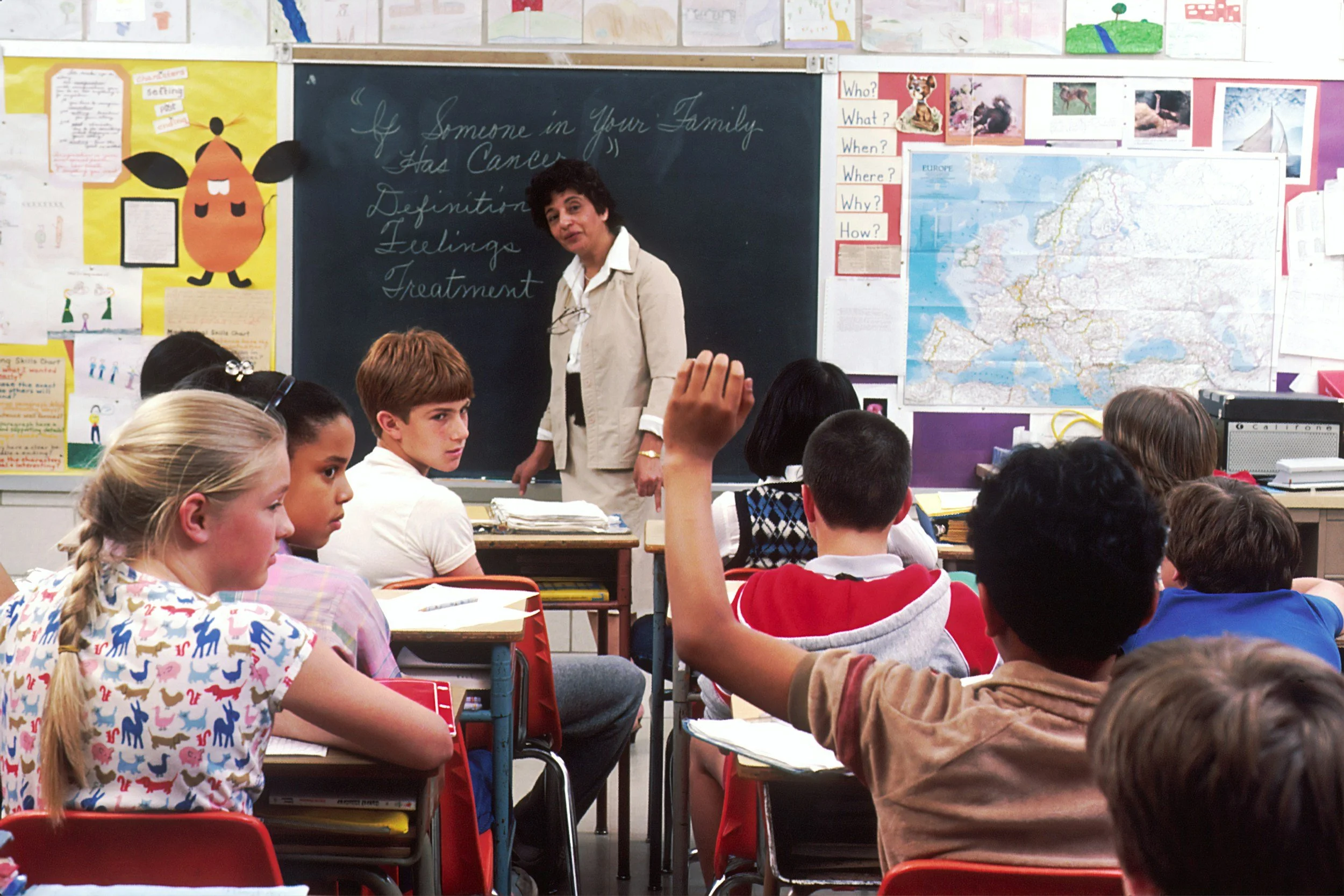
When did we stop valuing the power of natural consequences, such as shame, embarrassment, remorse, humiliation, disappointment and respect for self and others?
When we continue to prioritise the external consequence delivered by the educator, we diminish the value of natural consequences that generally come from within and have the power to change behaviour.
As educators, we have been taught to believe that for a child to adjust their behaviour, the motivator for change has to be external but we often miss the power of internal responses children have when they have made a poor choice.
When I was in Year 2. I attended a small Catholic school in the northern beaches of Sydney, Australia, and overall, I recall a sense of belonging and fondness. It was an idyllic school set not far back from the beach and was smaller than most primary schools today. The school was run mostly by nuns, but only in positions of authority, such as principal and executive staff. Although I enjoyed my time at this school and have mostly fond memories, one stands out that contributed to the response I had to requests, directions or instructions. I was inside at lunch time, returning my lunch box to my bag and was with some older students who were also family friends. The school had bannisters on the stairwells and it was a strict rule that we were not to slide down the bannisters. The girls I was with had began to do exactly that and were encouraging me to have a go. I refused as I knew it was the wrong thing to do and had already begun to value the importance of being seen as a ‘good girl’. I also looked up to these girls and enjoyed the sense of connection by being with them and feeling safe. At this point, the principal came out and yelled at us and told us to go to her office. I felt sick in the stomach. I tried to find my voice and advocate that I was merely standing there but was given no opportunity or compassion and instead made my way to the office.

Sitting in this small, stuffy office waiting for our lecture, reprimand and inevitable consequence was so traumatising for me. I began to cry and my older friends tried to comfort me and explain that it would be okay. For me, it did not feel okay, nor did it feel safe. In very simple terms, we were not allowed a voice, an opinion, a defense or an opportunity to contribute to repair or restoration.
The punishment was handed out and the expectation was made clear. But the worst part of this whole experience was returning to my classroom. Everyone was back in their seats after recess and I was entering the walk of shame. The eyes locked on me with a mix of judgment and relief both for who they thought I was and that they were not in my position. I was in trouble and everybody knew it. This has stuck with me, and I am almost 50.
I never ever went near the bannisters again. So, yes, in theory this form of behaviour management was a success. Compliance had feared me into obedience. But it did nothing for building my capacity to feel valued, respected or connected. It did quite the opposite. It added another layer to my imprint that being enough is doing the right thing…ALL THE TIME…regardless of your capacity, intent or choices. Their was no compassion for my thoughts, no time for my intent and no comprehension for the impact this had on my self worth and confidence.
Research conducted in the 1980’s in association with the University of Colorado, Seligmen and Maier, investigates the theory of learned helplessness in animals and part of this study was to administer painful electric shocks to dogs that had been confined to lock cages. After several shock treatments had been administered, they opened the cages and shocked the dogs one last time. A group of control dogs immediately ran away however, the dogs who had been shocked remained. They did not attempt to escape but merely lay there whimpering and defecating. According to Bessel Van Der Kolk (The Body Keeps Score, 2014) ‘the mere opportunity to escape does not necessarily make traumatized animals, or people, take the road to freedom. Like Maier’s and Seligman’s dogs, many traumatized people simply give up’. It is important to understand that the presence of a threat is merely enough for children to shift from listening to their internal warning signals and begin to abandon their values and comply in-order to prevent consequences, judgement or shame. As educators, it is our job to be mindful of the power of a consequence. Every time we see a persistent, challenging or inappropriate behaviour, we need to ask ourselves, ‘does this child need compassion or consequence?’ or even more importantly, do they need compassion and space before we implement a consequence? Is my role here to understand and guide or am I merely ensuring the behaviour stops so we can continue with the lesson or intended outcome?
Are our teachers administering electric shock? Are our classrooms the same as confined cages? NO!
By no means is this the intended correlation. But we need to understand that the human brain perceives a threat, and this triggers the nervous system to behave in ways that preserve safety, whether that is fighting back, fleeing from the threat, freezing and unable to react, or fawning, which is shutting down. If we miss vital clues in our students and prioritise complinace we run the risk of embedded behavioural responses that become the child’s imprint to ensure they feel connected and safe within the classroom. A child’s intent is never to purposefully ignore a request or follow an instruction. If they lack the skills or capacity to follow a request or instrcution is it not up to the educator to ensure safety is restored, skills are built or capacity is supported?

If you arrived late to work after a morning that involved a myriad of obstacles that you tried your best to manage but still fell short, which reaction would make you want to try harder or feel safe to do better:
Be reprimanded and threatened with the loss of your job. A warning was placed with HR, an example was made of you to all staff via a reminder email of the importance of being on time and a consequence that you stay back late to write an apology to the boss as to why you would not behave this way again:
A work colleague who offered a kind word of support, a boss who ensured they understood your load and checked in to see if there was any way they could help reduce your stress and provide access to advice and professionals to assist your stress load if needed.
Why do we demand more from students than we expect from ourselves? Why do we not realise that a kind, compassionate and supportive space to feel seen and heard is and should always be the first behaviour strategy? With the increased prevalence in anxiety, depression, school refusal, school can’t and bullying, the priority for managing student behaviour needs to focus on calming the nervous system that has become activated and dysregulated, prioritising the connection and sense of belonging and then discussing ways to move forward to ensure skills are developed and capacity grows to make better choices in the future. There needs to be a possibility within the system that educators have the time to value this approach, resources to support the nervous system before addressing the problem, training and support to prioritise kindness over criticism, compassion instead of judgement and support before consequences. This is vital for the teachers as much as the students.
Behaviour is a way for our children to communicate their needs and when we continually ignore the attempt to communicate, we increase the risk of defiance, refusal, anxiety, disrespect, disengagement, lack of care etc. When this continues over time we can inadvertently increase the need for the child to seek attachment and connection regardless of the impact the behaviour has on themselves and others.
Consequences are a natural part of life and life is full of them. Do we, as educators, eradicate all expectations and accountability? NO! But do we begin to understand what the brain needs in order to learn? Do we focus on the developmental appropriateness of the consequence? Do we realise that if connection is the first priority, then the consequnece become about learning, not punishing. A brain that is regulated is a brain that is open to learn and able to absorb new demands, constant requests and stimulation that is unavoidable and part of every classroom. When we disregard the power of consequces we risk the chance of doing more harm than good. Consequences are far more valuable than punishments but we need to understand how they impact the developing child.
If we want students who are inquisitive, critical thinkers, problem solvers, innovators, thought seekers, curious, creative, ideas centred, etc then we need to remind ourselves that education should be about fostering a child’s ability to feel safe to question, confident to challenge boundaries and clarify expectations and have a sense of belonging that enables a sense of safety within their skin to do this respectfully - which only comes with practice and maturity. The only way we learn to do exactly that is to reimagine what the classroom looks like. Unfortunately, under the current system, the content and demands of the classroom outweigh the impact we are having on allowing all students to feel seen, heard and valued for the way they are developing, the skills they possess and the capacity they have to regulate and remain calm.